Digital Marketing: The Future of Business Growth
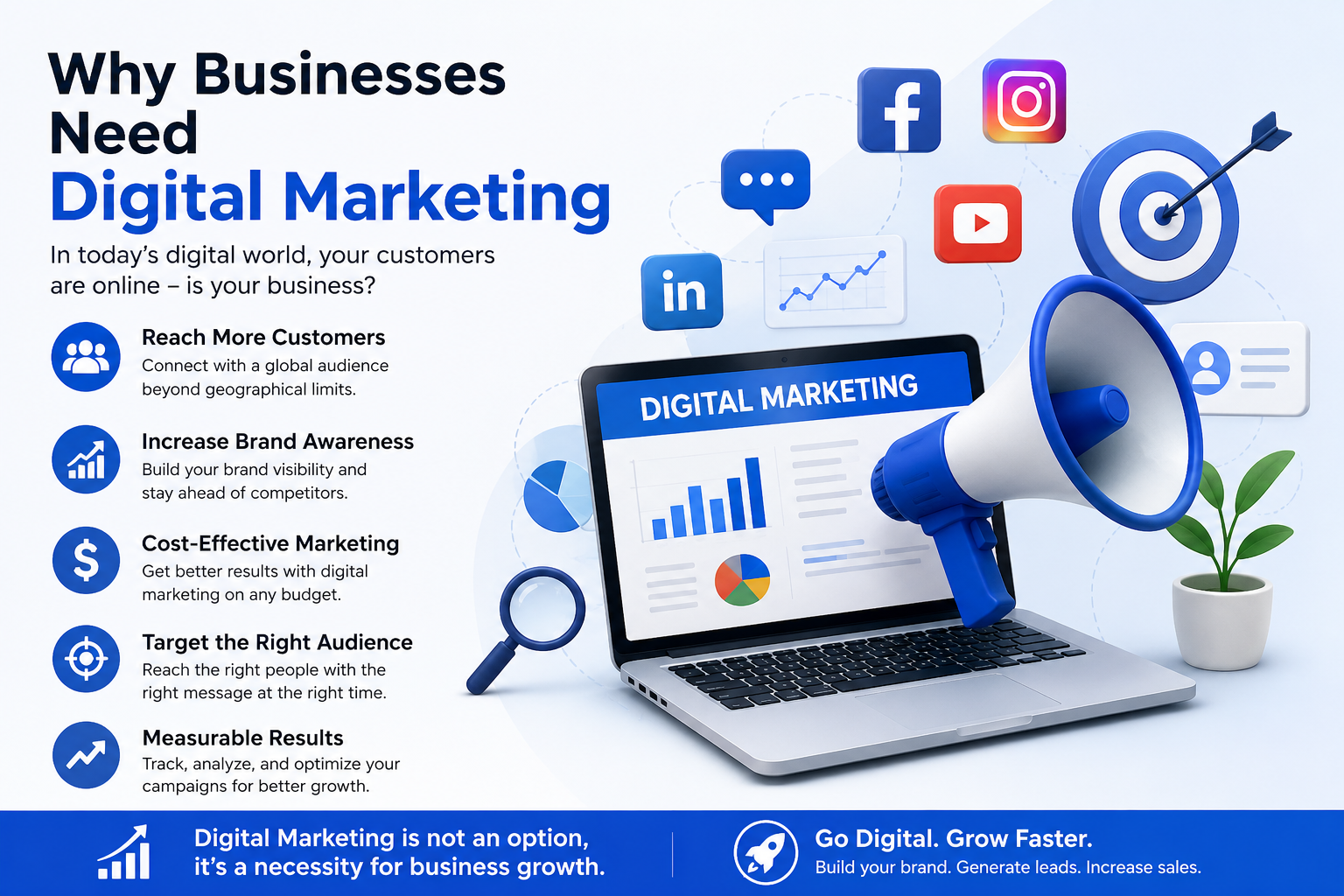
The Future of Business Growth Digital marketing has transformed the way businesses connect with customers. In the past, companies depended heavily on television commercials, newspapers, radio advertisements, and physical banners to promote their products and services. Today, the internet has become the primary place where people search for information, compare brands, read reviews, and make purchasing decisions. This shift has made digital marketing one of the most powerful tools for business growth. A strong digital presence helps businesses reach the right audience, build credibility, and create long-term customer relationships. Whether a company is a small startup or a large enterprise, digital marketing provides opportunities to compete effectively in an increasingly connected world. Understanding Digital Marketing Digital marketing refers to the promotion of products, services, or brands through digital channels such as websites, search engines, social media platforms, email, mobile applications, and online advertising. Unlike traditional marketing, digital marketing allows businesses to interact directly with customers and measure the results of their campaigns in real time. Companies can track website traffic, monitor customer behavior, analyze conversion rates, and improve their strategies based on actual data. This ability to measure performance makes digital marketing more efficient and adaptable than many traditional advertising methods. Why Businesses Need Digital Marketing The modern consumer spends a significant amount of time online. People use smartphones, tablets, and computers throughout the day to search for products, watch videos, read articles, and communicate with others. If a business is not visible online, it risks losing potential customers to competitors who have established a strong digital presence. Digital marketing helps businesses increase visibility, attract targeted audiences, and generate qualified leads. It also allows companies to communicate their brand message consistently across multiple platforms, creating a stronger and more recognizable identity. The Importance of a Professional Website A website is often the first impression a customer has of a business. A professional website should be visually appealing, easy to navigate, mobile-friendly, and optimized for fast loading speeds. Visitors should quickly understand what the business offers and how they can contact the company. A well-designed website builds trust and encourages visitors to explore further. It also serves as the foundation for other digital marketing activities such as search engine optimization, content marketing, and online advertising Search Engine Optimization and Online Visibility Search Engine Optimization, commonly known as SEO, is the process of improving a website’s visibility in search engine results. When people search for information related to a business, appearing near the top of the results increases the chances of attracting visitors. Effective SEO involves creating high-quality content, optimizing website structure, improving page speed, and using relevant keywords naturally within the content. Businesses that invest in SEO often benefit from long-term organic traffic without relying entirely on paid advertising. Content Marketing as a Trust-Building Strategy Content marketing focuses on creating valuable and informative content that helps customers solve problems or answer questions. Blog articles, videos, guides, case studies, and educational resources are all examples of content marketing. Instead of directly pushing sales messages, businesses provide useful information that demonstrates expertise and builds trust. When customers consistently find helpful content from a company, they are more likely to view that business as a reliable source and eventually become loyal customers. Social Media and Customer Engagement Social media platforms have become essential communication channels for businesses. Platforms such as Facebook, Instagram, LinkedIn, YouTube, and X allow companies to interact directly with their audience. Successful social media marketing goes beyond posting promotional content. It involves responding to comments, answering questions, sharing useful information, and creating engaging conversations. Businesses that actively communicate with their followers often develop stronger relationships and higher customer loyalty. The Role of Paid Advertising Paid digital advertising provides businesses with a way to reach targeted audiences quickly. Platforms such as Google Ads and social media advertising systems allow companies to display advertisements based on location, age, interests, and online behavior. This level of targeting helps businesses reach people who are most likely to be interested in their products or services. A well-optimized advertising campaign can generate traffic, leads, and sales while providing measurable results that help improve future campaigns. Email Marketing and Customer Retention Email marketing remains one of the most effective digital marketing channels. It allows businesses to communicate directly with customers who have already shown interest in their products or services. Personalized newsletters, product updates, educational content, and special offers help maintain customer engagement over time. Unlike social media algorithms, email messages reach subscribers directly, making email marketing a valuable tool for customer retention and repeat business. Mobile Marketing in a Smartphone-Driven World Most internet users now access online content through mobile devices. As a result, businesses must ensure that their websites, advertisements, and digital content are optimized for smartphones and tablets. Mobile-friendly design, fast loading times, and easy navigation are essential for providing a positive user experience. Companies that ignore mobile optimization risk losing customers who expect seamless experiences across all devices. Data and Analytics for Better Decisions One of the greatest advantages of digital marketing is access to detailed data and analytics. Businesses can monitor how visitors interact with their website, which pages receive the most attention, how long users stay on the site, and what actions they take. This information helps companies understand customer behavior and make informed marketing decisions. Continuous analysis allows businesses to improve their campaigns, reduce unnecessary expenses, and increase their return on investment. Building Brand Authority Brand authority is developed through consistency, quality, and customer trust. Businesses that regularly publish valuable content, maintain professional communication, and deliver excellent customer experiences gradually become recognized as leaders in their industry. Strong brand authority makes it easier to attract new customers, generate referrals, and compete in crowded markets. Digital marketing provides multiple opportunities to demonstrate expertise and reinforce a company’s reputation. Common Mistakes in Digital Marketing Many businesses expect immediate results from digital marketing and become discouraged when growth takes time. Others focus only on selling products without providing value to their audience. Some